Research
Research Journey
I studied electronics engineering for my bachelor's, but my interests had always leaned toward physics, which eventually led me to pursue an MSc in Physics at IIT Madras. My academic work there included a thesis on Hartree-Fock methods in atomic and many-body systems. During this time, I also found myself becoming increasingly interested in the foundations of quantum mechanics. I was uncomfortable with the special role given to measurement in the standard formalism, and became curious about the status of the wavefunction and what, if anything, it represents about a physical system. I also wanted to understand how these questions developed historically, and how we arrived at the conceptual and formal structure of quantum mechanics that we use today.
At the time, I approached these questions with the intuitive assumption that a physical theory should, in some sense, give us an account of the reality of the system it describes. As I began reading more seriously in quantum foundations, however, that assumption itself became something I was less certain about. I became interested in what constraints quantum theory and its no-go results place on different accounts of physical reality, but also in what we mean by such an account in the first place. Can we expect an observer-independent description of reality, or does our epistemic standpoint enter more fundamentally into how physical systems can be described? These questions have led me toward the relationship between ontology and epistemology in quantum theory, observer-dependent descriptions and agency, and the epistemology of the measurement problem itself, including the question of what it means to perform a measurement.
Research Interests
Thesis & Projects
Independent Study: Foundations of Quantum Mechanics
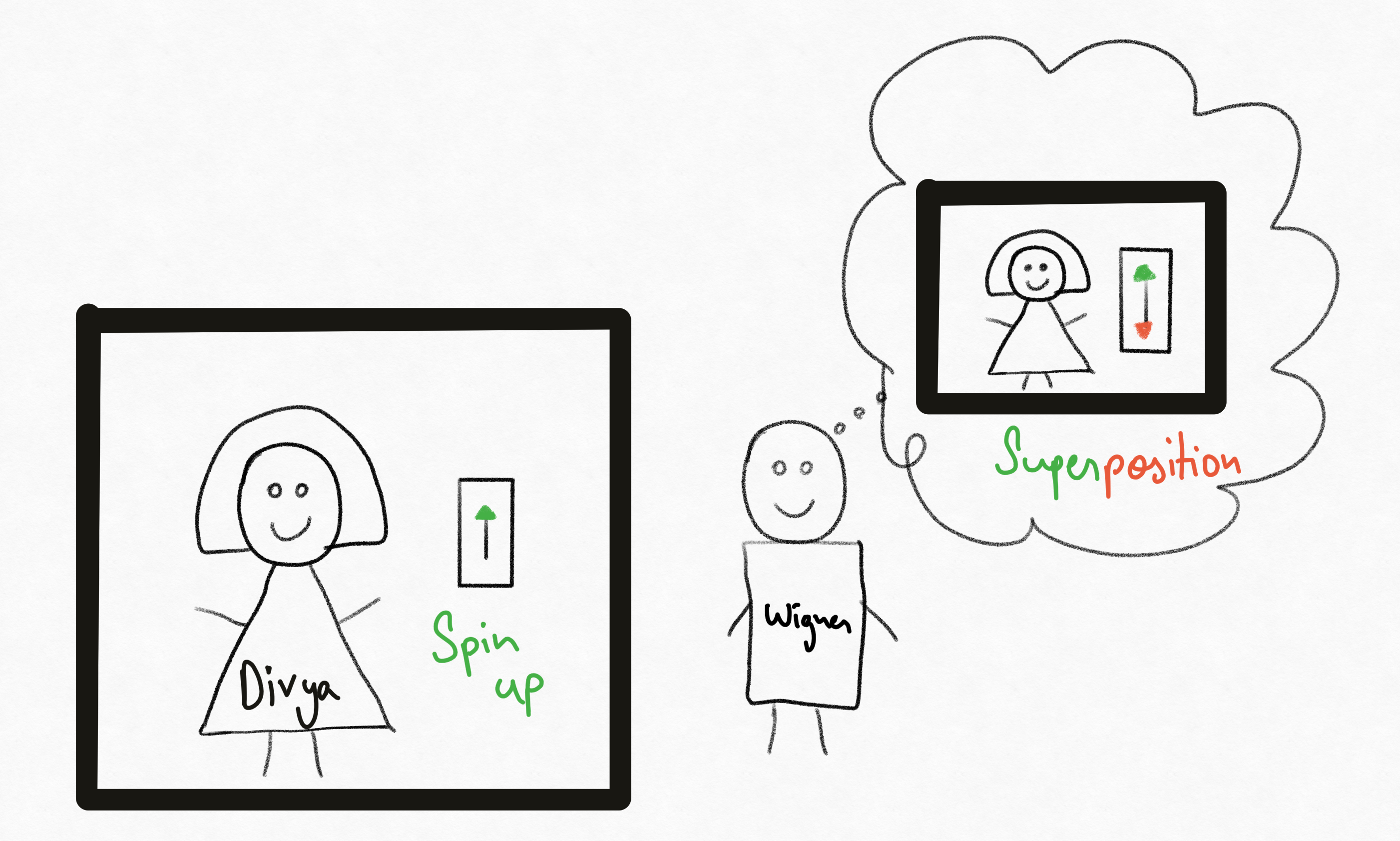
I have been independently studying the conceptual foundations of quantum theory, beginning with foundational no-go theorems, ontological models, and different interpretations of quantum mechanics. My reading has included questions around the status of the quantum state, what constraints results such as Bell's theorem, contextuality, and the PBR theorem place on accounts of physical reality, and the broader relationship between ontology and epistemology in quantum theory.
More recently, I have been exploring observer-dependent descriptions through extended Wigner's Friend scenarios, the Frauchiger-Renner theorem, and Local Friendliness, alongside questions about scientific objectivity and how different observers' descriptions might be related. Some of this work developed into a presentation at the Thought Experiments Summer School 2026, where I received First Prize for Best Presentation.
MSc Thesis: Interacting Fermionic Systems
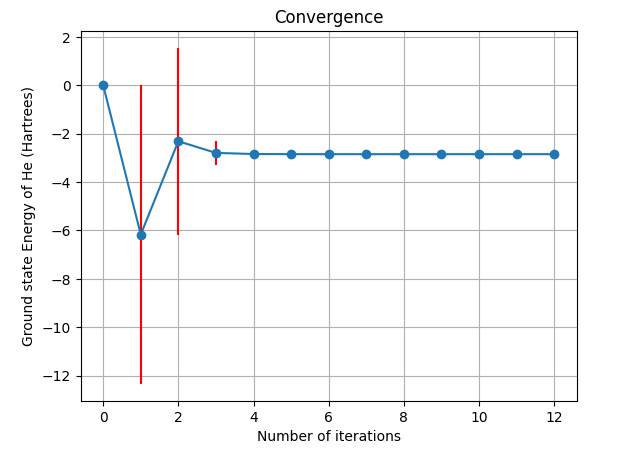
My MSc thesis focused on interacting many-body fermionic systems using the Hartree-Fock approximation within the Green's function formalism. I studied two-point correlation functions and the application of many-body perturbation theory to interacting systems, working through the theoretical development of the Hartree-Fock approximation in this framework.
As a numerical application, I computed the ground-state energy of the helium atom within the Hartree-Fock approximation. The project gave me experience working across the analytical and computational aspects of a many-body physics problem, from developing the formalism to implementing numerical methods.
Reading Project: Group Theoretic Methods
I studied group theory and representation theory with an emphasis on their applications in physics, covering discrete groups and their applications in condensed matter and atomic physics, as well as Lie groups and Lie algebras in high-energy physics.
As part of the project, I studied the use of A4 symmetry in neutrino mixing and worked through the derivation of the PMNS mixing matrix presented in my supervisor's work. This gave me an opportunity to apply the group-theoretic ideas I had been learning to a concrete problem in particle physics.