Community & Teaching
I've had a tendency to share things I find interesting for as long as I can remember. If I come across an idea that excites me, my instinct is usually to tell someone about it. As I've grown older, that instinct has found its way into teaching and building communities, and into thinking about the kinds of spaces I want to help create for people.
I've also learnt that people find their way into things differently. Whether it's a classroom, a conversation, or a public space, I try to understand where someone is coming from and leave room for different ways of engaging. Sometimes that means asking questions, sometimes trying something with your hands, sometimes playing, and sometimes simply being given the space to look a little closer.
Nirvanart Studio
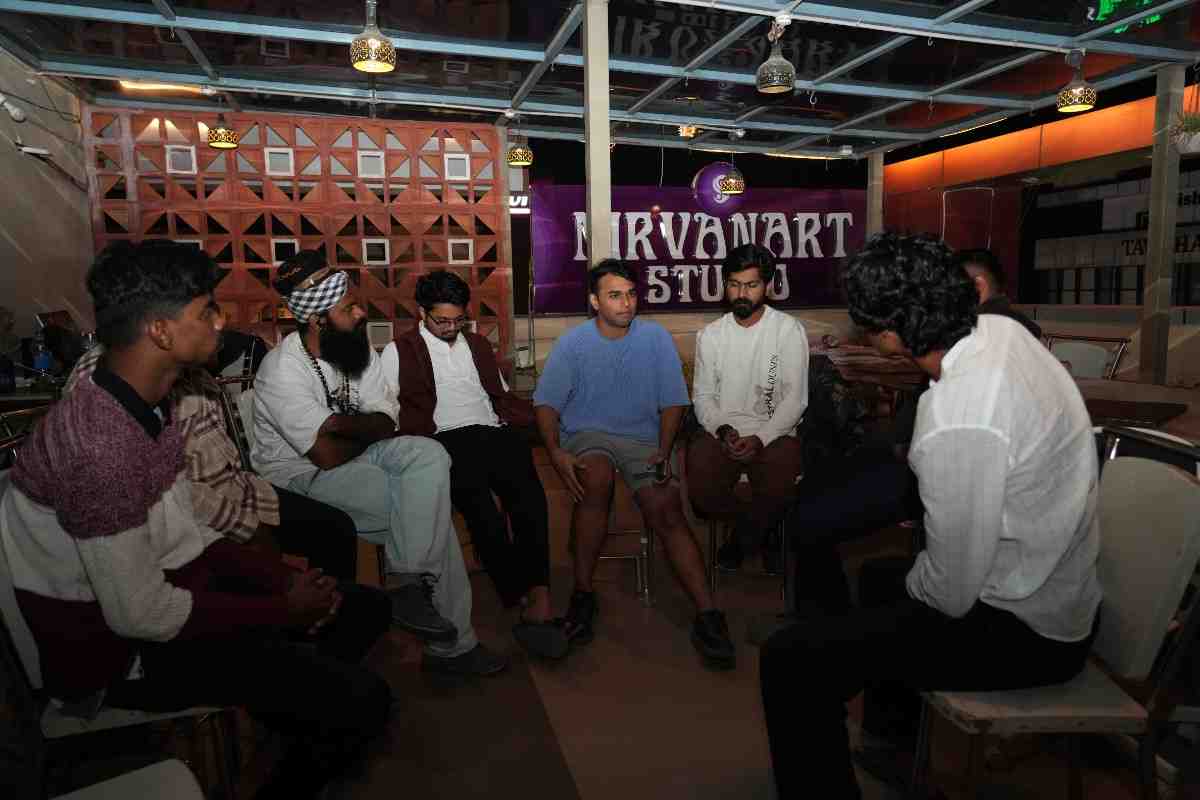
Nirvanart began with an idea my friend Vishnu had for a creative third space, after noticing how few spaces like that existed around Sainikpuri. When I graduated and moved back home, we spent a lot of time talking about creativity and what the creative process can do for us, alongside conversations that wandered into all sorts of other things. Around the beginning of 2025, some of those ideas slowly started taking a more concrete form: a physical space, a business, and, most importantly, a creative community.
At its core, Nirvanart is a space where people can experience, participate, create, and belong. We host workshops, performances, exhibitions, conversations, and other creative experiences, while also leaving room for people to simply spend time in the space and with each other. We're interested in what can happen when artists, facilitators, and people from different backgrounds have a place to meet, try things, share what they make, and become part of a community over time.
As part of the founding team, I contribute across logistics, planning, programming, and the technical side of building and running the space.
Möbius Dialogue
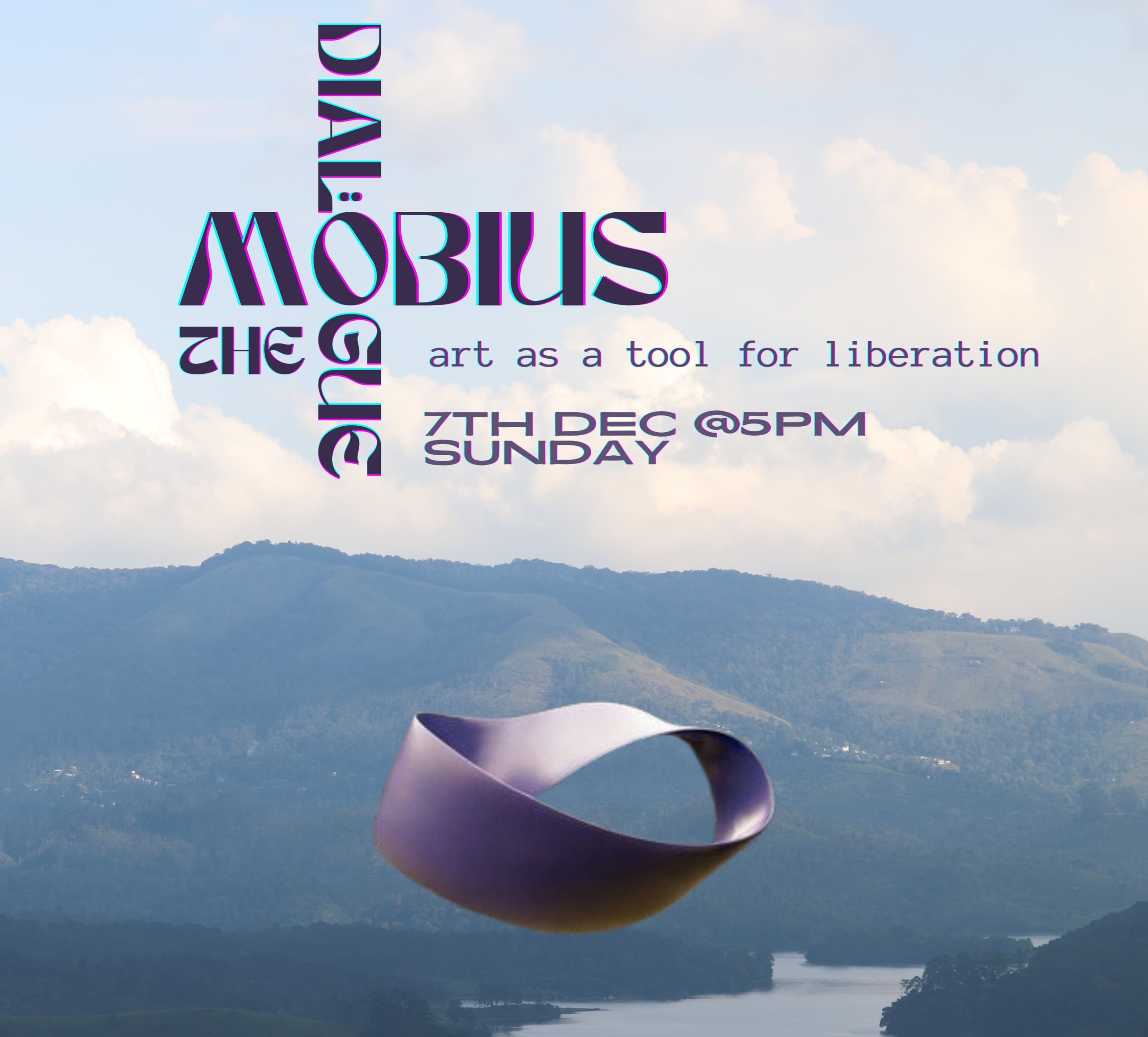
Möbius Dialogue began, in some ways, as a return to the kinds of conversations Vishnu and I used to have before Nirvanart became a physical space. I was also influenced by the work of J. Krishnamurti and David Bohm, particularly after attending a weekend dialogue retreat at the Krishnamurti Foundation India in Chennai towards the end of 2024. When we finally had a space of our own, it felt natural to make room for those kinds of conversations there too.
Facilitating Möbius has been an interesting practice for me in itself. I've had to sit with the discomfort of wanting to pull a conversation in a direction that I favour, rather than allowing the dialogue itself to set the stage. It asks for a lot of patience: creating enough space for a group to stay with a question and explore where it takes us, while trying to put aside my own biases without pretending that I don't have them.
The dialogue usually begins with a broad topic, but we don't really know where we'll end up, and there isn't a particular conclusion we're trying to reach. Different perspectives, feelings, and experiences find their way into the conversation, and over time, I try to step back from being a facilitator and become another person in the dialogue. Sometimes personal experiences come up, sometimes there's discomfort, and sometimes we find ourselves somewhere quite different from where we started. The idea is to give ourselves the time to stay with questions we might otherwise move past, and see what happens when we explore them together.
How to join: see Nirvanart for details →
Frontend Development Teaching
I got the opportunity to teach frontend development at CMR Technical Campus through Study Masth!, as part of their placement training programme. Teaching such a large group felt challenging at first. Sessions usually began with introducing concepts in HTML, CSS, and JavaScript, followed by time for students to practise. I tried to bring in real-world examples and things they could actually make, hoping to get them a little more excited about experimenting with code.
Over time, I found myself thinking more about the circumstances in which the students were learning. For many, getting placed carried very real financial pressures, and I also noticed how accustomed they were to learning for exams rather than exploring or making something of their own. During practice sessions, I gradually learnt to notice how differently students approached learning and adapt how I worked with them. I was glad to receive positive feedback from both students and Study Masth!, but what stayed with me most was an awareness of everything that sits around learning, and how much that shapes the way someone enters a classroom.
Teach for India
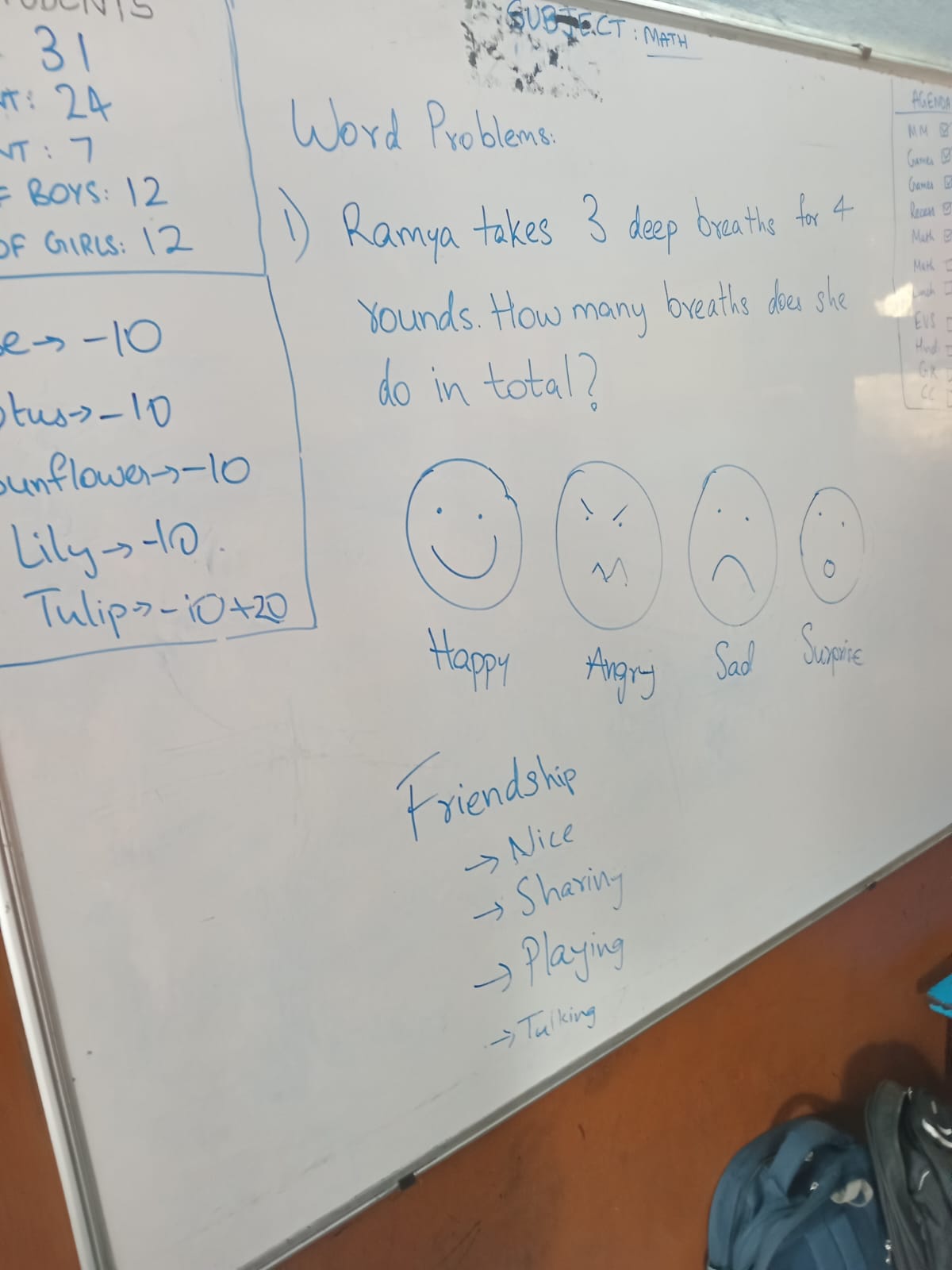
After teaching college students for a semester, I found myself wanting to understand more about the conditions that shape how students learn much earlier in their lives. I started looking for opportunities to volunteer in schools, particularly where I could work with children with different learning needs, something I felt was often overlooked in conversations about education. That eventually led me to volunteer with Teach for India for six months, teaching mathematics to second graders.
At first, teaching second graders felt completely out of place for me. I struggled to hold their attention and often felt like I couldn't control the classroom. Over time, I started questioning what I even meant by control. I wanted the children to have room to be themselves, but we also had to somehow get some math done. The Fellows I worked with were incredibly supportive in helping me figure this out, and through them I also learnt more about my students and their lives outside the classroom. Gradually, I realised that a lot of my job was simply to pay attention to the children in front of me, understand where each of them was, and teach from there.
One moment that has stayed with me was watching a student I'd been patiently working with on addition and subtraction begin answering questions in class and getting them right. It was a small change that had happened gradually, but I remember how happy I was to see it. Experiences like that made me appreciate the small bits of progress that can be easy to miss, and how much patience and attention teaching children can sometimes need.